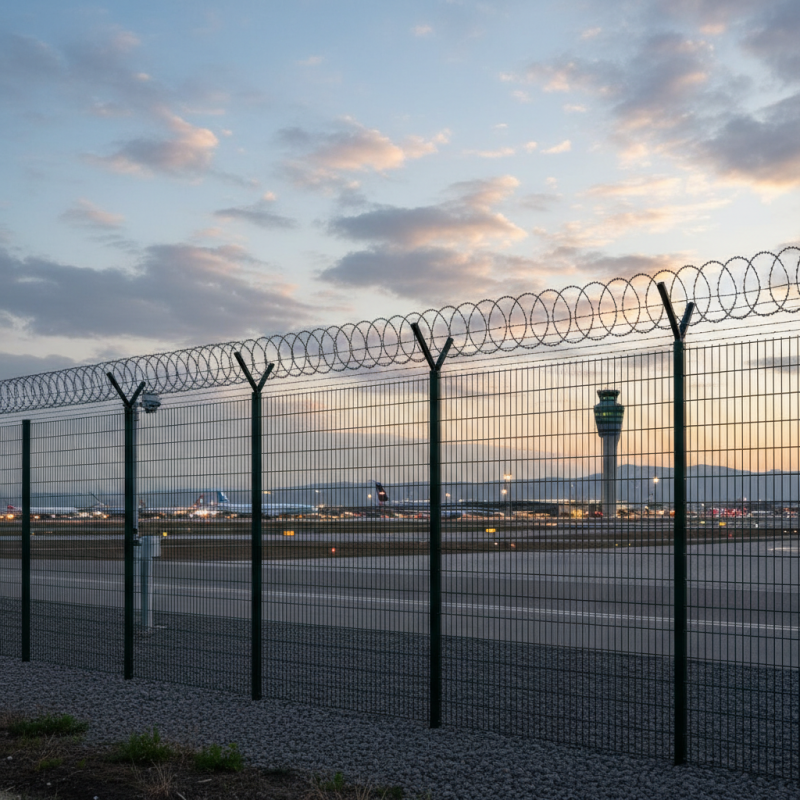
When it comes to airport security, choosing the right fencing is crucial. Different types of airport fencing solutions offer unique benefits. For instance, chain link fences are commonly used. They are durable and cost-effective. However, they provide limited visibility control. This can potentially be a risk.
Another option is the solid panel fence. It is often more expensive but offers greater privacy. This type can deter unauthorized access more effectively. Yet, it may require regular maintenance. Over time, wear and tear can undermine its effectiveness. There is also the option of electric fencing. This can serve as a strong deterrent. But, it raises concerns about safety for airport personnel and wildlife.
Besides these, barbed wire fences add an extra layer of security. They are difficult to climb, making unauthorized access tougher. Yet, they can pose a risk to animals and stray birds. Striking a balance between safety and security remains a challenge. Each fencing option has its pros and cons. It's essential to assess the specific needs of the airport environment.
Choosing the right materials for airport fencing is critical for security and safety. First, the material should withstand various environmental conditions. Strong winds, rain, and snow can all impact the integrity of the fence. It's essential to select corrosion-resistant options to ensure longevity. Chain-link fences offer visibility but might not deter all intruders. Solid panels, on the other hand, can block sightlines but may require more maintenance.
Another consideration is the height of the fence. Taller fences can provide better security but can also obstruct views. This might raise concerns for nearby communities or wildlife. Balancing safety with aesthetics is crucial. Additionally, integrating technology like surveillance cameras and alarms into the fencing design can enhance security measures. It’s not just about the physical barrier; it’s about creating a holistic security environment.
Lastly, consider the cost implications. Investing in high-quality materials may seem expensive, but replacing cheap options often adds up. A well-planned fence can save money over time. Assessing the specific needs and potential vulnerabilities is essential. Each airport is unique, requiring tailored solutions that reflect individual priorities and challenges. While there's no perfect choice, thoughtful consideration can lead to improved outcomes.
Effective airport security fencing systems are critical for ensuring safety and preventing unauthorized access. Research indicates that well-designed fencing can deter 95% of potential intruders. Height and durability are vital features. Fences must be at least 8 feet high and constructed from materials resilient to tampering. This discourages breaches and offers a visual barrier for criminals.
Another important aspect is visibility. Fencing should not obstruct the view of surveillance cameras. Clear sightlines enable security personnel to monitor activity effectively. A report from the International Airport Association highlights that installing high-quality fencing can reduce security breaches by over 35%. However, some systems may fail due to insufficient maintenance, leading to vulnerabilities. Regular inspections are essential but often overlooked, leading to potential gaps in security.
Additionally, integrating technology into fencing systems enhances their effectiveness. Motion sensors and alarms can provide real-time alerts. Yet, overreliance on technology poses risks. Human oversight is crucial. A balance between advanced features and practical management has yet to be achieved in many facilities. Addressing these challenges can significantly improve security measures at airports.
| Fence Type | Height (ft) | Material | Key Features | Cost (per foot) |
|---|---|---|---|---|
| Chain Link Fence | 8 | Steel | Durable, cost-effective, easy visibility | $15 |
| Electric Fence | 6-10 | Wire | High security, deterrent for intruders | $30 |
| High Security Fence | 10 | Steel | Anti-climb, tamper-resistant | $45 |
| Plea of Fence | 8 | Aluminum | Lightweight, corrosion-resistant, aesthetic | $25 |
| Barbed Wire Fence | 5-8 | Steel | Intimidating, additional security layer | $20 |
In the quest for maximum security, airports must incorporate advanced technology into their fencing solutions. Smart fences are becoming a popular choice, integrating sensors and surveillance systems. These innovations allow for real-time monitoring of perimeters. According to a recent industry report, 75% of security breaches occur through weak entry points. Therefore, enhancing airport fencing is a critical issue.
Fencing equipped with intrusion detection technology does more than just mark boundaries. It employs radar and motion sensors to identify potential threats. Studies show that airports using high-tech fencing experience a 40% reduction in unauthorized access incidents. However, the implementation of these systems can be costly and complex. Not every airport can afford extensive upgrades.
Additionally, the human element cannot be overlooked. Security personnel must be trained to respond to technological alerts. Without proper training, even the best systems may fail to prevent breaches. Maintenance of technology plays a role too; old sensors may produce false alarms. Regular evaluations of fencing technology are essential to ensure effectiveness. Balancing innovation and practicality remains an ongoing challenge for airport security managers.
Maintaining airport fences is crucial for security and safety. Regular inspections help identify weak spots. Look for rust, loose wires, or any signs of wear. A small issue can escalate quickly if ignored. Routine maintenance schedules can prevent these problems.
Cleaning fence lines is also important. Debris can hide damage and create safety hazards. Ensure that vegetation doesn't grow too close. Clear the area regularly. In some cases, invasive plants can destabilize the fence structure.
Weather impacts airport fences significantly. Harsh conditions can cause wear and tear. Be mindful of heavy winds or extreme temperatures. Repainting may be necessary to prevent rust. Each location has unique challenges, so adapt maintenance practices accordingly. Learning from past mistakes is essential; assess what went wrong in previous years. Consider how to improve outcomes.