How to Choose the Best Pallet Racking System for Your Warehouse Needs
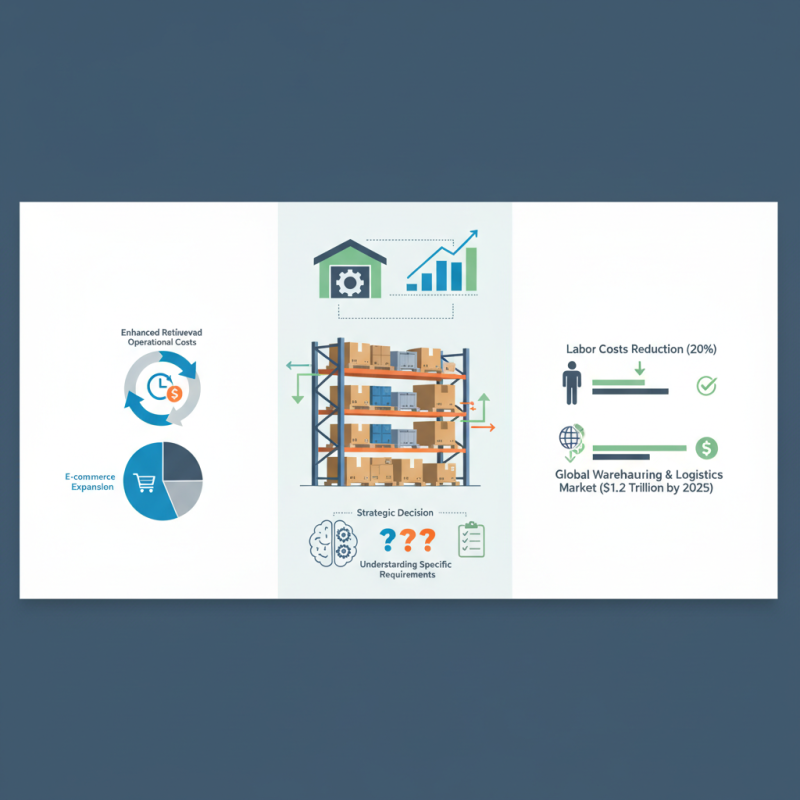
In today’s fast-paced industrial landscape, selecting the right pallet racking system is crucial for optimizing warehouse efficiency and maximizing storage capacity. With the global warehousing and logistics market projected to reach $1.2 trillion by 2025, the importance of choosing an effective pallet racking solution cannot be overstated. According to a report by Technavio, the demand for effective storage solutions is driven by the increasing need for space optimization as e-commerce continues to expand rapidly, pushing warehouse operators to rethink their inventory management strategies.
A well-designed pallet racking system not only enhances retrieval times but also helps in minimizing operational costs. For instance, research conducted by the Warehousing Education and Research Council (WERC) indicates that efficient racking systems can lead to a reduction in labor costs by as much as 20% due to improved accessibility and workflow. As businesses strive to meet the ever-changing demands of their customers, understanding the specific requirements of their warehouse operations and how various pallet racking configurations can address those needs is essential for long-term success. In this context, choosing the right pallet racking system becomes a strategic decision that contributes significantly to a warehouse's overall productivity and effectiveness.
Understanding Different Types of Pallet Racking Systems
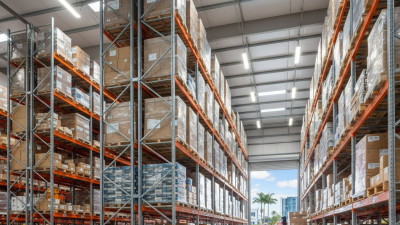
When selecting a pallet racking system for your warehouse, it's essential to understand the various types available, as each design serves specific needs and functionalities. The most common type is selective racking, which allows easy access to all pallets, making it ideal for warehouses with a wide variety of products. This system maximizes storage density, as it can accommodate different pallet sizes and weights, though it may require more aisle space for operation.
Another type is drive-in racking, which is designed for high-density storage. This system enables forklifts to drive directly into the racking structure, allowing for the storage of multiple pallets in a single lane. It is best suited for companies that handle large quantities of a few products, as it utilizes space efficiently but restricts access to pallets at the back until those in front are removed. Additionally, push-back racking provides a balance between accessibility and storage density, allowing pallets to be stored in a slightly sloped system that lets the back pallets push forward as those in front are retrieved. Understanding these different pallet racking systems is crucial in making an informed decision that aligns with your warehouse needs.
How to Choose the Best Pallet Racking System for Your Warehouse Needs - Understanding Different Types of Pallet Racking Systems
| Type of Racking | Description | Advantages | Disadvantages | Best Used For |
|---|---|---|---|---|
| Selective Pallet Racking | The most common type, allowing direct access to each pallet. | Easy to install, high accessibility. | Lower storage density, requires more aisle space. | Warehouses with diverse SKUs. |
| Drive-In Racking | A high-density storage solution where forklifts enter the rack structure. | Maximizes storage space, efficient for large quantities of fewer SKUs. | Limited access; first in, last out system. | Bulk storage facilities. |
| Push Back Racking | Pallets are loaded onto carts that slide back when new pallets are added. | High density, easy access to pallets. | Requires specific forklifts, limited to two to six pallets deep. | Storing various SKUs with similar turnover rates. |
| Flow Racking | Utilizes gravity to move pallets from the loading side to the picking side. | Automatic FIFO inventory management, high density. | Higher upfront cost, specific design needed. | Perishable goods, high-rotation inventory. |
Related Posts
-

Best 10 Pallet Racking Solutions in Melbourne for Efficient Storage
-
Top 5 Benefits of Push Back Racking for Optimizing Warehouse Space
-

Top 10 Warehouse Pallet Racks to Optimize Your Storage Space in 2025
-

2025 How to Optimize Your Warehouse Space with Industrial Pallet Racks
-
Why You Should Choose Dexion Pallet Racking for Efficient Warehouse Storage
-
Why Choose Pallet Racking in Brisbane for Your Warehouse Storage Needs
