China Top 10 Pallet Racking Suppliers for Melbourne?
Choosing the right pallet racking melbourne supplier is not simply a price comparison. It is a warehouse safety decision.
Melbourne facilities face varied conditions. Some handle cartons, while others store steel components, food products, or fast-moving ecommerce orders. Each operation needs suitable beam lengths, upright frames, load ratings, aisle widths, and forklift clearances. The best suppliers should explain these details clearly. They should also provide practical site measurements, installation support, inspection options, and responsive after-sales service.
David Berridge, a recognised storage-equipment specialist and former SEMA director, has often emphasised this principle: “A rack is only as safe as its design, installation, inspection, and use.” That message matters in Australia, where warehouse operators must consider relevant guidance and standards, including AS 4084. Professional advice remains essential.
This guide examines ten pallet racking suppliers serving Melbourne businesses. It considers product range, engineering capability, installation experience, maintenance support, customer feedback, and value over time. A polished website proves very little. Actual project experience matters more.
Look closely at the details. Are load plaques supplied? Are damaged frames repaired promptly? Can the supplier adapt storage as inventory changes? These questions reveal more than promotional claims.
Not every supplier will suit every warehouse. That is the uncomfortable part. A low initial quote may create higher costs later. The strongest choice combines reliable equipment, competent installation, clear documentation, and honest communication. Some facilities also need a second opinion. That is sensible, not excessive.
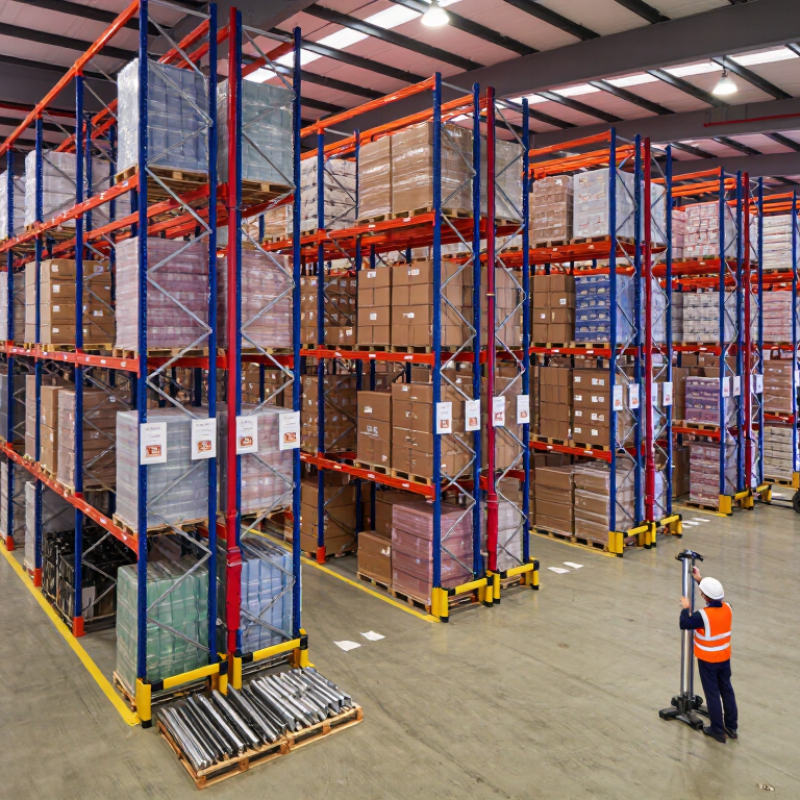
How to Evaluate Chinese Pallet Racking Suppliers for Melbourne
Evaluating Chinese pallet racking suppliers for Melbourne requires more than comparing prices. Check whether the supplier understands Australian warehouse conditions and local safety expectations. Ask for load calculations, steel grades, coating details, welding records, and product test reports. Documents should match the proposed beam sizes and upright profiles. Generic certificates are not enough.
Request a factory video or an independent inspection before payment. Look for automated forming equipment, measured steel thickness, controlled welding, and clear batch identification. A reliable supplier should provide drawings suitable for review by a qualified Australian engineer. Confirm alignment with applicable Australian standards, including AS 4084 where relevant. Installation guidance, anchoring details, and inspection procedures also matter. Small gaps in documentation can become expensive site problems.
Consider Melbourne’s delivery conditions. Confirm packing methods, shipping terms, replacement-part availability, and response times after installation. Ask for references from warehouses with similar loads, forklift traffic, and operating temperatures. A low quotation may exclude engineering review, unloading, or local support. That deserves scrutiny. No supplier is perfect, and early samples may reveal finish marks or minor dimensional variation. The key question is whether the company records defects, corrects them, and prevents repetition. Clear communication, traceable quality control, and realistic lead times usually indicate a safer long-term relationship.
| Rank | Anonymised Supplier Profile | Core Product Scope | Typical Application for Melbourne | Indicative Load Capability | Engineering and Compliance Evidence to Request | Indicative Manufacturing Lead Time | Export and Delivery Capability | Key Evaluation Risk | Indicative Evaluation Score |
|---|---|---|---|---|---|---|---|---|---|
| 1 | Profile 01 Integrated manufacturer |
Selective pallet racking, double-deep racking, drive-in systems, beams, frames and wire decking. | General warehouses, 3PL facilities and mixed-SKU storage with forklift access. | Commonly engineered for approximately 500–5,000 kg per beam level, subject to bay geometry and design. | AS 4084 design documentation, load tables, material certificates, welding records, coating data and installation instructions. | Approximately 25–45 days after approved drawings and deposit. | Suitable for containerised export; confirm packing list, fumigation requirements, Incoterms, port handling and Melbourne delivery arrangements. | Verify independent structural calculations and actual production capacity. | 92/100 |
| 2 | Profile 02 Heavy-duty specialist |
Heavy-duty selective racking, pallet flow, push-back racking and high-capacity uprights. | Industrial parts, beverage, manufacturing and high-throughput distribution centres. | Typical project designs range from approximately 1,000–6,000 kg per beam level, depending on span and loading pattern. | Request structural calculations, deflection criteria, steel grade, section properties, seismic assumptions and component test evidence. | Approximately 30–50 days, excluding design approval and shipping. | Good fit for full-container orders; verify corrosion protection for coastal or humid Melbourne environments. | Heavy-duty claims may not apply to every beam and upright combination. | 90/100 |
| 3 | Profile 03 Automated-storage capable |
Selective racking, very-narrow-aisle layouts, shuttle-compatible racking and automation interfaces. | High-density distribution centres with defined pallet sizes and warehouse management systems. | Usually designed around 800–4,500 kg per level; automated layouts require equipment-specific calculations. | Request rack-and-automation interface drawings, rail tolerances, floor flatness criteria, load combinations and maintenance access provisions. | Approximately 40–70 days for engineered or automation-ready systems. | Suitable for staged export; confirm responsibility split between rack, conveyor, controls and local commissioning. | Interface tolerances and local commissioning support can materially affect project cost. | 88/100 |
| 4 | Profile 04 Cold-store specialist |
Adjustable pallet racking, drive-in systems, mobile-racking components and corrosion-protected accessories. | Chilled and frozen warehouses, food distribution and temperature-controlled storage. | Commonly engineered for approximately 500–4,000 kg per level, with special attention to pallet condition and impact loads. | Request coating specification, low-temperature suitability, weld quality records, hygiene-related finish information and cleaning requirements. | Approximately 35–60 days, depending on coating and accessory requirements. | Confirm packaging protection, moisture control during sea freight and unloading procedures at the Melbourne site. | Coating performance and installation tolerances must be checked for low-temperature operation. | 86/100 |
| 5 | Profile 05 Mid-market exporter |
Standard selective racking, carton flow, shelving, pallet supports and safety accessories. | Small and medium warehouses, retail distribution and general storage applications. | Frequently configured for approximately 300–3,000 kg per beam level. | Request complete bill of materials, component load tables, steel grade, coating thickness, inspection plan and installation method statement. | Approximately 20–40 days for standard configurations. | Cost-effective for repeatable container orders; confirm spare-part availability and after-sales response times. | Lower initial price may reflect thinner sections, fewer accessories or limited engineering support. | 84/100 |
| 6 | Profile 06 Custom-layout fabricator |
Non-standard bay widths, custom frames, cantilever racking, long-span shelving and mezzanine interfaces. | Irregular warehouse footprints, long goods, oversized products and retrofit projects. | Project-specific designs commonly range from 500–5,000 kg per level, subject to geometry and anchoring. | Request stamped or signed calculations where required, connection details, base-plate design, anchor specifications and floor-load assumptions. | Approximately 35–60 days for custom fabrication. | Confirm whether drawings are prepared in metric units and whether local site measurement is included. | Customisation can increase design revisions, lead time and installation complexity. | 82/100 |
| 7 | Profile 07 Volume-production plant |
Selective racking, pallet supports, mesh panels, column guards and high-volume standard components. | Large rollouts requiring consistent components across multiple warehouses. | Common standard configurations support approximately 500–3,500 kg per beam level. | Request batch traceability, dimensional inspection records, coating inspection results and production quality-control procedures. | Approximately 25–45 days for confirmed standard designs. | Strong potential for container-load efficiency; verify minimum order quantities and mixed-container flexibility. | Standard production may offer less flexibility for unusual pallet sizes or site constraints. | 80/100 |
| 8 | Profile 08 Safety-accessory focused |
Pallet racking, back mesh, end-of-aisle protection, column guards, bollards and safety barriers. | Facilities prioritising pedestrian separation, forklift-impact protection and rack safety upgrades. | Rack systems are commonly engineered for approximately 500–3,000 kg per beam level; protection products are project-specific. | Request impact-protection specifications, anchor details, aisle-clearance requirements, rack inspection guidance and replacement procedures. | Approximately 25–45 days for standard products. | Efficient for accessory-heavy orders; confirm compatibility with existing rack dimensions and Australian site requirements. | Safety accessories do not replace a compliant rack design or site risk assessment. | 78/100 |
| 9 | Profile 09 Project-trading integrator |
Multiple racking types sourced through a coordinated supply chain, including shelving and warehouse accessories. | Budget-sensitive projects needing a consolidated quotation for several storage categories. | Indicative range of 300–3,000 kg per beam level; verify the original manufacturer of every component. | Request manufacturer-specific calculations, certificates, quality records, warranty terms and a clear responsibility matrix. | Approximately 35–65 days, depending on sourcing and consolidation. | Can simplify procurement, but confirm factory address, container loading controls and export documentation ownership. | Traceability and consistency may be weaker when components come from different factories. | 74/100 |
| 10 | Profile 10 Small-batch custom supplier |
Light-to-medium-duty pallet racking, shelving, workbenches and small warehouse fit-out products. | Small warehouses, workshops, spare-parts storage and phased expansion projects. | Often suitable for approximately 200–2,000 kg per beam level, subject to a project-specific design. | Request load-rating evidence, material thickness, weld inspection records, packaging details and references for comparable exports. | Approximately 20–45 days for smaller orders. | May suit LCL or small-container shipments; confirm freight consolidation, damage claims and replacement-part arrangements. | Limited engineering resources may be unsuitable for tall, seismic or highly automated installations. | 70/100 |
Related Posts
-
How to Find Top Pallet Racking Manufacturers in China?
-
What Are the 2026 Top Pallet Racking Types in Melbourne?
-
2026 Best Dexion Pallet Racking Solutions for Global Buyers?
-
How to Choose the Best Pallet Rack Shelving for Your Warehouse?
-
China Top 10 Storage Racking Suppliers for Global Buyers
-
10 Storage Racking Tips for Global Buyers
