What Are the Top Racking and Shelving Types in 2026?
In 2026, warehouse storage is becoming more adaptable, measurable, and space-conscious. The best racking and shelving system depends on inventory, building height, handling equipment, and daily workflow.
Selective pallet racking remains a practical choice for varied stock and direct pallet access. Drive-in racking can increase density, but it reduces product selectivity. Cantilever racking suits long materials, including timber, pipes, and metal profiles. Carton flow shelving supports fast picking, while mobile shelving can save valuable floor space. Automated systems may improve accuracy, yet they require stronger planning, maintenance, and investment.
The details matter.
A reliable design starts with accurate load data, aisle measurements, and realistic growth forecasts. Warehouse managers should review beam capacity, upright protection, floor conditions, and forklift clearance. Clear labels and scheduled inspections can prevent small defects from becoming expensive disruptions. Professional installers and qualified engineers also help verify structural safety and operational suitability.
Still, no option is perfect. High-density storage can slow access, while flexible systems may use more floor area. I have seen layouts that looked efficient on paper but created awkward turning points during busy shifts. That practical gap deserves attention. The most suitable solution balances capacity, accessibility, worker movement, budget, and future changes. This guide examines the leading racking and shelving types expected to shape warehouses in 2026, with a careful focus on performance, safety, and long-term reliability.
How Racking and Shelving Systems Are Classified in 2026
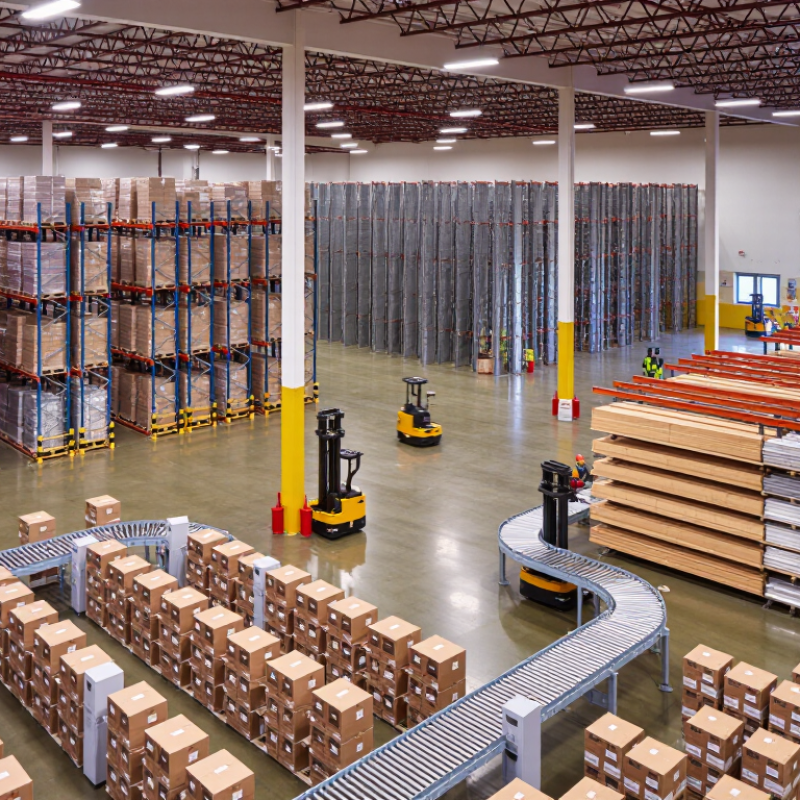
In 2026, racking and shelving systems are classified by load type, access method, structure, and technology level. This approach is more useful than naming systems by appearance alone. Pallet racking serves palletized goods and forklift access. Shelving supports smaller cartons, bins, and hand-picked items. Cantilever systems handle long products, such as pipes, timber, and metal sections. Mobile systems reduce unused aisle space by moving storage rows. Automated systems combine storage hardware, software, and guided equipment.
Access speed creates another important classification. Selective systems offer direct access to every load. Drive-in designs increase density but limit stock rotation. Flow systems use rollers or gravity to support controlled movement. Mezzanine-supported storage adds vertical working space without expanding the building footprint. However, no classification is perfect. A system may fit several groups, especially when warehouses combine manual picking with automation. Field assessments should examine floor strength, ceiling height, load dimensions, turnover rates, and operator movement.
Tips: Record the heaviest load first. Measure the real pallet, not the advertised size. Leave safe clearance around beams and sprinklers. Check whether fast-moving goods need direct access. Review the layout after installation, because daily traffic often exposes weak assumptions. A small trial zone can reveal picking delays, awkward reaches, and wasted aisle space before a full rollout.
What Are the Top Racking and Shelving Types in 2026? — How Racking and Shelving Systems Are Classified
A practical classification of common warehouse storage systems by load unit, access method, inventory profile, and typical application.
| System Type | Primary Load Unit | Access and Selectivity | Best Suited For | Key Design Consideration |
|---|---|---|---|---|
| Selective Pallet Racking | Palletized loads | Direct forklift access to each pallet; high selectivity | Warehouses with many product lines and frequent access to individual pallets | Requires operating aisles for forklifts; storage density depends on aisle width and layout. |
| Double-Deep Racking | Palletized loads | Two pallets stored deep; the rear pallet has restricted direct access | Operations seeking more pallet positions than single-deep selective layouts provide | Typically requires a reach truck or another suitable handling method, and works best with several pallets per SKU. |
| Drive-In / Drive-Through Racking | Palletized loads | Forklift enters storage lanes; access is generally lane-based rather than pallet-by-pallet | High-volume, relatively low-variety inventory, often managed by batch or date sequence | Drive-in commonly uses a last-in, first-out (LIFO) flow; drive-through can support first-in, first-out (FIFO) when loading and unloading occur at opposite ends. |
| Push-Back Racking | Palletized loads | Multiple pallets stored deep on inclined carts; front pallets are accessed first | Medium- to high-density storage with multiple pallets per SKU | Generally operates on a LIFO basis; pallet and cart compatibility must be checked during system design. |
| Pallet Flow Racking | Palletized loads | Gravity rollers or wheels move pallets from the loading end to the picking end | High-throughput stock rotation and operations requiring FIFO flow | Requires compatible pallets, controlled loading, and attention to lane capacity and flow characteristics. |
| Carton Flow Racking | Cases, cartons, or totes | Gravity-fed lanes replenish picking faces from the rear | Piece-picking and case-picking operations with repeatable product dimensions | Carton size, weight, base condition, and lane slope affect reliable movement. |
| Cantilever Racking | Long or bulky items | Open-front access along arms; no front columns obstruct the storage face | Timber, pipe, steel sections, panels, and other long-length products | Arm length, column spacing, load distribution, and protection from impact should match the stored material. |
| Longspan Shelving | Hand-loaded cartons, bins, and medium-sized items | Manual access from the aisle; shelves can be configured at different levels | Stockrooms, workshops, and small-parts or case-picking areas | Confirm the rated load for each shelf level and distribute items as specified by the system design. |
| Mobile Shelving | Files, cartons, containers, or light-to-medium goods | Shelving units move on tracks or guided bases to open an access aisle where needed | Areas where floor space is limited and access frequency can accommodate aisle movement | Floor capacity, safe operating procedures, and access requirements are important planning factors. |
System selection should be based on the stored load, inventory rotation, required access, available space, material-handling equipment, and applicable local design and safety requirements. Capacity ratings vary by configuration and must be verified for the specific installation.
Related Posts
-
China Top 10 Storage Racking Suppliers for Global Buyers
-
10 Storage Racking Tips for Global Buyers
-
What is a Pallet Rack Beam and How Does it Work?
-
Best Pallet Storage Solutions for Global Buyers?
-
Top 10 Longspan Shelving Solutions for Maximizing Storage Efficiency
-
How to Choose the Right Racking System for Your Storage Needs?
