7 Best Push Back Racking Systems for Global Buyers
Global buyers are reassessing warehouse capacity, especially where land, labor, and inventory costs keep rising. Push back racking offers a practical answer for palletized goods with several stock-keeping units. It uses inclined rails and nested pallets, often creating two to six storage positions per lane. That means more pallets within the same footprint. It also reduces forklift travel compared with many conventional selective layouts.
Industry data supports this shift. The MHI 2024 Annual Industry Report found that 55% of supply-chain professionals planned to increase technology investment. The report also identified inventory and network optimization as a major adoption priority. These figures do not prove that every warehouse needs push back racking. Product velocity, pallet quality, forklift type, and fire protection still matter. Sometimes, a denser system simply hides poor inventory discipline.
Warehouse management author Gwynne Richards writes, “The warehouse is no longer just a cost centre; it is a vital part of the supply chain.” That principle is important when comparing the seven best push back racking systems for global buyers. A reliable solution must do more than store pallets. It should support clear loading rules, stable rails, safe unloading, and consistent inspection routines across different sites.
Details matter.
This guide compares structural design, capacity, operating method, installation requirements, and supplier support. It also considers real-world limitations, including reduced selectivity and possible pallet damage. The best system is rarely the densest one. It is the system that matches inventory behavior, equipment capability, and local operating conditions.
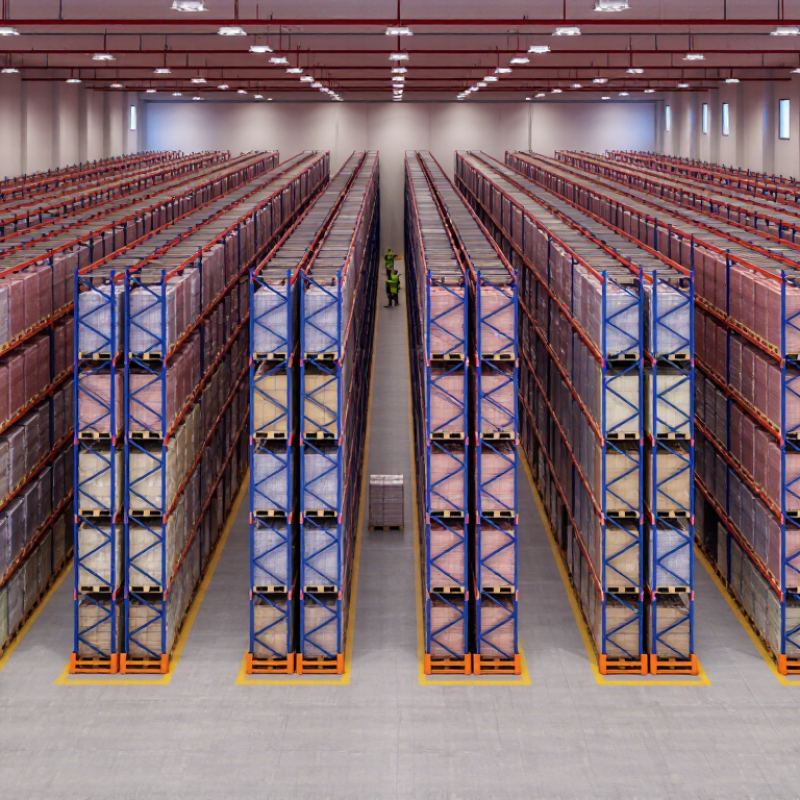
Define Seven Push-Back Racking Configurations and Their LIFO Storage Logic
Push-back racking stores pallets from one aisle and retrieves them in reverse order. That is the core LIFO logic: the newest pallet enters first, while the front pallet leaves first. The seven useful configurations are two-, three-, four-, five-, and six-pallet-deep lanes, plus single-bay and back-to-back layouts. Depth controls storage density. Bay layout controls aisle access and capacity.
In a two-deep lane, operators gain faster access and simpler pallet control. Three- and four-deep lanes balance density with practical loading speed. Five- and six-deep lanes suit stable products with fewer stock-keeping units. They demand accurate pallet placement. A single-bay layout supports clearer product separation. A back-to-back layout increases floor efficiency but needs careful aisle planning. Cart-based systems suit mixed pallet weights, while roller-based systems can provide smoother movement when loads are consistent. These mechanisms can overlap with each depth option.
Tips: Confirm pallet dimensions, load weights, and forklift clearances before selecting depth. Mark each lane clearly. Keep one product family per lane whenever possible. LIFO can reduce selectivity, so it is not ideal for expiry-sensitive inventory without strict rotation controls. I have seen deeper lanes appear efficient, yet create hidden stock and slower counts. That trade-off deserves honest review. Also inspect wheel tracks, rails, stops, and upright connections regularly. Small alignment problems can become costly handling problems.
7 Best Push Back Racking Systems for Global Buyers
Seven push-back racking configurations and their LIFO storage logic
| Configuration | Typical Lane Depth | Storage Arrangement | Pallet Access | LIFO Storage Logic | Typical Selectivity | Space-Density Profile | Best-Fit Applications | Key Planning Consideration |
|---|---|---|---|---|---|---|---|---|
| 1. Two-Pallet-Deep Single-Lane Push-Back | 2 pallet positions deep | One SKU lane with two pallets stored front-to-back on wheeled carts or nested platforms | Front access only | The newest pallet is loaded from the aisle and pushes the earlier pallet toward the rear. During retrieval, the front pallet is removed first, allowing the rear pallet to roll forward. | High | Moderate density; short travel distance and simple lane control | Fast-moving products, limited SKU quantities, and operations requiring frequent replenishment | Maintain a clear front position so the rear pallet can move forward safely and consistently |
| 2. Three-Pallet-Deep Single-Lane Push-Back | 3 pallet positions deep | One SKU lane with three nested cart levels or pallet-support positions | Front access only | Each newly stored pallet pushes the existing sequence deeper into the lane. Retrieval follows strict LIFO: the front pallet leaves first, followed by the next pallet moving forward. | Medium-High | Good density with a practical balance between capacity and accessibility | Medium-volume reserve storage and products handled in full-pallet quantities | Use lane labels or warehouse-management rules to prevent mixing incompatible lots in one lane |
| 3. Four-Pallet-Deep Push-Back Lane | 4 pallet positions deep | Four pallet positions arranged on nested carts or a continuous cart-guided system | Front access only | The loading forklift places a pallet at the front and pushes the stored pallets backward. The first pallet retrieved is always the most recently loaded pallet at the aisle face. | Medium | High density with reduced aisle demand compared with conventional selective rack | Reserve inventory, seasonal goods, and operations with several pallets per SKU | Confirm forklift reach, mast clearance, pallet quality, and cart travel limits before installation |
| 4. Five-Pallet-Deep High-Density Push-Back | 5 pallet positions deep | Deep-lane storage using multiple nested carts and dedicated lane levels | Front access only | Loading is performed by pushing the previously stored pallets toward the back of the lane. Unloading reverses the sequence, so the last pallet stored is the first pallet removed. | Medium-Low | Very high storage density; fewer aisles are required per stored pallet | Low-SKU-count warehouses, bulk reserve stock, and predictable replenishment cycles | Greater depth increases inventory access time and makes SKU segregation especially important |
| 5. Six-Pallet-Deep Maximum-Density Push-Back | 6 pallet positions deep | Extended deep-lane configuration with several nested carts or long guided platforms | Front access only | Every loading movement pushes the existing pallets farther into the lane. The lane must be emptied from the front in reverse loading order to preserve LIFO discipline. | Low | Extremely high density, but with the lowest direct access among standard push-back layouts | Long-term reserve inventory, stable product families, and high-volume palletized goods | Use only where product turnover, pallet uniformity, and LIFO requirements justify the deeper lane |
| 6. Multi-Level Push-Back Rack | Usually 2–5 pallet positions deep per level | Two or more vertical storage levels, with independent push-back lanes on each beam level | Front access to each level | LIFO operates independently within each lane and level. A pallet stored last in a specific lane is retrieved first from that lane; other levels are not affected. | Medium | High cubic utilization by combining deep storage with vertical building height | Facilities with high clear height and multiple pallet positions per SKU | Check building height, sprinkler clearance, seismic requirements, beam capacity, and lift-truck elevation limits |
| 7. Double-Block Push-Back Layout | Two back-to-back rack blocks; typically 2–5 pallets deep per lane | Two push-back rack banks placed back-to-back, with each lane independently assigned to a SKU or lot | Front access from each aisle side | Each lane follows front-loading and front-unloading LIFO logic. Back-to-back placement increases density, while separate aisle faces provide independent access to both rack blocks. | Medium | High density with efficient use of floor area and fewer aisle corridors | Large distribution centers, temperature-controlled storage, and palletized reserve inventory | Allow space for structural stability, rack inspection, fire protection, and safe forklift turning movements |
Related Posts
-
What Is Push Back Racking and How Does It Work?
-
Top Pallet Racking Solutions in Brisbane for 2025 You Need to Know
-
How to Find Top Pallet Racking Manufacturers in China?
-
China Top 10 Pallet Racking Suppliers for Melbourne?
-
10 Expert Tips to Maximize Storage Efficiency with Uline Pallet Racks
-

How to Choose the Right Industrial Pallet Racks for Your Warehouse Needs
